
 rosendo
 French cuisine remains one of the world’s most influential culinary traditions because it established the foundational techniques that modern cooking still relies on. Mastering traditional French dishes means learning how to properly sauté, braise, emulsify, and build layered flavors through classic methods like making roux, clarifying stocks, and reducing sauces. These twelve essential recipes represent the cornerstone of French cooking, from everyday bistro staples to refined preparations that showcase precision and patience.
What makes French cuisine particularly valuable for skill development is its methodical approach to building flavor. Each dish teaches specific techniques that transfer across countless other recipes. When you learn to make a proper boeuf bourguignon, you’re not just following a beef stew recipe. You’re learning how to sear protein correctly, deglaze a pan, marry wine with aromatics, and achieve the precise texture that separates a rushed dish from one that’s been thoughtfully constructed.
The recipes ahead range from approachable weeknight preparations to weekend projects that reward careful attention. Some require just a handful of quality ingredients and basic technique. Others demand multiple steps and longer cooking times but teach you patience and precision that elevate your overall cooking ability. Whether you’re building your technique repertoire or seeking authentic recipes that connect you to French culinary heritage, these dishes offer both immediate satisfaction at the table and lasting skills in the kitchen.
What Makes a French Dish ‘Traditional’
A traditional French dish earns that designation through more than age alone. These recipes represent the codified techniques and regional wisdom that formed the backbone of *haute cuisine* and home cooking across France’s provinces. The dishes selected here meet specific criteria that make them both historically significant and practically valuable for contemporary cooks.
The selection framework balances several key factors:
- Historical provenance documented in classic French culinary texts and regional cooking traditions
- Technique variety that teaches fundamental methods like braising, emulsification, and caramelization
- Ingredient accessibility using components available to home cooks without specialty sourcing
- Skill-building value that develops competencies transferable to broader French cooking
- Regional diversity representing France’s distinct culinary territories from Provence to Burgundy
These criteria ensure each recipe delivers multiple learning opportunities. A dish like coq au vin, for instance, teaches wine reduction, proper searing, and building layered flavors through braising. It carries documented history stretching back centuries while using chicken, wine, and aromatics most cooks already stock.
Regional representation matters because French cuisine developed not as a monolith but as a collection of distinct provincial styles shaped by local ingredients and conditions. Including both Mediterranean bouillabaisse and hearty Languedoc cassoulet illustrates this geographic breadth while teaching contrasting approaches to building complex flavors.
The enduring relevance of these dishes stems from their technical foundations rather than nostalgia. Modern chefs still employ the same braising principles perfected in boeuf bourguignon and the caramelization control demonstrated in tarte tatin. Mastering these recipes means acquiring methods that apply across countless preparations, making them genuinely foundational rather than merely traditional.
12 Essential Traditional French Dishes
Coq au Vin (Chicken in Wine)
Coq au Vin exemplifies the French philosophy of transforming humble ingredients into something extraordinary through patient technique and proper wine selection. This Burgundian classic teaches you how controlled braising creates fall-apart tender chicken while building complex, layered flavors.
The dish begins with searing chicken pieces in rendered bacon fat until deeply golden, this crucial step creates fond, the browned bits that become your flavor foundation. After searing, you’ll build the braising liquid with red wine (traditionally Burgundy), aromatics, and that precious fond scraped from the pan bottom. The wine must have enough body and acidity to withstand hours of cooking without turning flat or bitter.
Braising happens at a gentle simmer, either on the stovetop or in a 325°F oven. Low heat allows collagen in the chicken thighs to break down gradually, creating silky texture while the wine reduces and concentrates. Pearl onions and mushrooms join near the end, adding sweetness and earthiness without becoming mushy.
The final sauce should coat the back of a spoon, thick enough to cling but not gluey. This balance comes from reduction, not flour slurry shortcuts. Master Coq au Vin and you’ve learned the braising technique that underlies dozens of French stews.
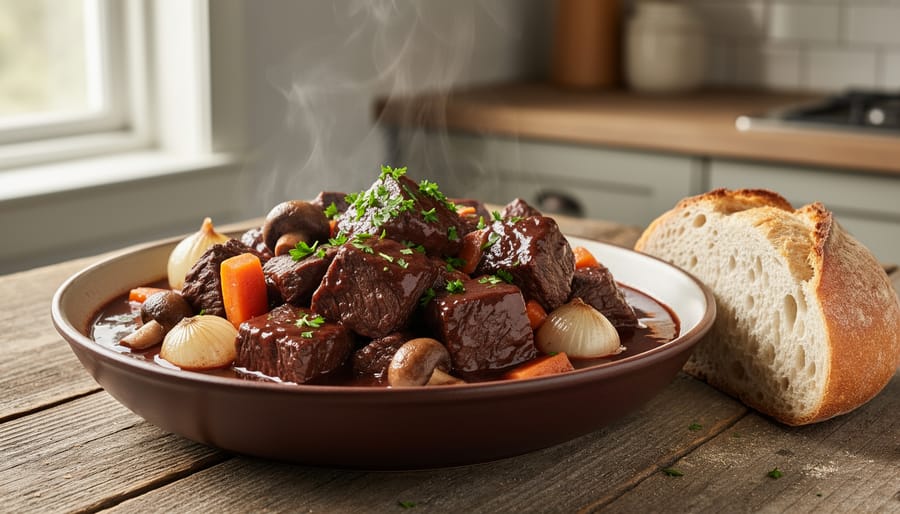
Boeuf Bourguignon (Burgundy Beef Stew)
Boeuf Bourguignon transforms tough beef into melt-in-your-mouth tenderness through patient braising in red Burgundy wine. This dish teaches you how low, steady heat breaks down collagen into gelatin, creating that silky, luxurious texture no quick-cook method can replicate.
Choose chuck roast or beef cheek, cuts with enough marbling and connective tissue to withstand three hours of cooking without drying out. Lean cuts like sirloin turn stringy and disappointing. The initial searing step isn’t optional: browning the beef cubes in batches creates fond (those caramelized bits stuck to the pan) that becomes the foundation of your sauce’s depth.
The wine does double duty as braising liquid and flavor builder. A decent Burgundy or Pinot Noir works beautifully, but skip anything you wouldn’t drink. As the stew simmers, alcohol evaporates while concentrated fruit notes marry with the beef’s richness.
Pearl onions and mushrooms join late, keeping their shape and adding textural contrast to the tender beef. The timing matters: add them in the final 30 minutes so they cook through without turning mushy. Boeuf Bourguignon proves that great French cooking isn’t complicated, just deliberate.
Ratatouille
Ratatouille stands as Provence’s gift to vegetable cookery, teaching patience and respect for individual ingredients. Each vegetable, eggplant, zucchini, bell peppers, tomatoes, and onions, gets cooked separately to preserve its distinct texture and flavor before the final marriage in the pot. This isn’t laziness prevention; it’s technique.
Start by salting and draining your eggplant chunks to remove bitterness and excess moisture. Sauté each vegetable in olive oil until just tender, transferring them to a bowl as you go. This approach prevents the watery mush that happens when everything cooks together from raw. The zucchini stays firm, the peppers retain some snap, and the eggplant becomes creamy without turning to paste.
Once vegetables are prepped, layer them back together with tomatoes, garlic, and herbs, thyme, basil, oregano. Simmer gently for 20 minutes to let flavors meld while textures stay defined. The result demonstrates why French cooking prioritizes technique over shortcuts: each bite offers distinct vegetable character within a unified, aromatic whole. Serve warm or at room temperature.
Bouillabaisse
Originating from the fishing port of Marseille, bouillabaisse transforms the day’s catch into a saffron-scented celebration of Mediterranean seafood. This isn’t a simple fish soup, it’s a two-part dish where you serve the aromatic broth first, followed by the poached seafood with rouille, a garlicky saffron mayonnaise.
The foundation starts with building a rich stock from fish bones and heads, simmered with tomatoes, fennel, orange zest, and the essential threads of saffron that give bouillabaisse its distinctive golden color and earthy aroma. The technique here is critical: you want a rolling boil to emulsify the fish oils into the broth, creating that characteristic cloudy richness rather than a clear consommé.
For the seafood itself, firm white fish like monkfish, sea bass, or red snapper work best, along with shellfish such as mussels or prawns. Add the fish in stages based on cooking time, denser pieces first, delicate fillets last, to ensure everything reaches perfect doneness simultaneously. Each bite should be tender and infused with that complex blend of fennel, saffron, and sea.
The dish teaches you proper stock construction, precise timing with multiple seafood varieties, and the layering of aromatics that defines Provençal cooking.
Quiche Lorraine
Quiche Lorraine stands as one of France’s most recognizable savory tarts, originating from the Lorraine region in northeastern France. The traditional version contains just three main components: a buttery pâte brisée crust, a silky egg-and-cream custard, and smoky lardons (thick-cut bacon).
The foundation lies in the pastry. A proper pâte brisée requires cold butter worked into flour until it resembles coarse crumbs, then brought together with ice water. This creates a tender, flaky base that supports the filling without becoming soggy. Blind baking the shell partially before adding the custard ensures a crisp bottom.
The custard ratio matters tremendously. Classic Lorraine proportions call for whole eggs and heavy cream in roughly a 1:2 ratio by volume, typically three eggs to one and a half cups of cream. This produces a custard that sets firmly yet remains creamy, not rubbery. Some recipes incorporate a small amount of Gruyère, though purists insist on bacon alone.
Cook the lardons until they render their fat and develop color, then drain them before scattering in the shell. Pour the seasoned custard over the bacon and bake at 375°F until the center barely jiggles. The quiche should rest fifteen minutes before slicing, allowing the custard to firm completely while staying silky throughout.
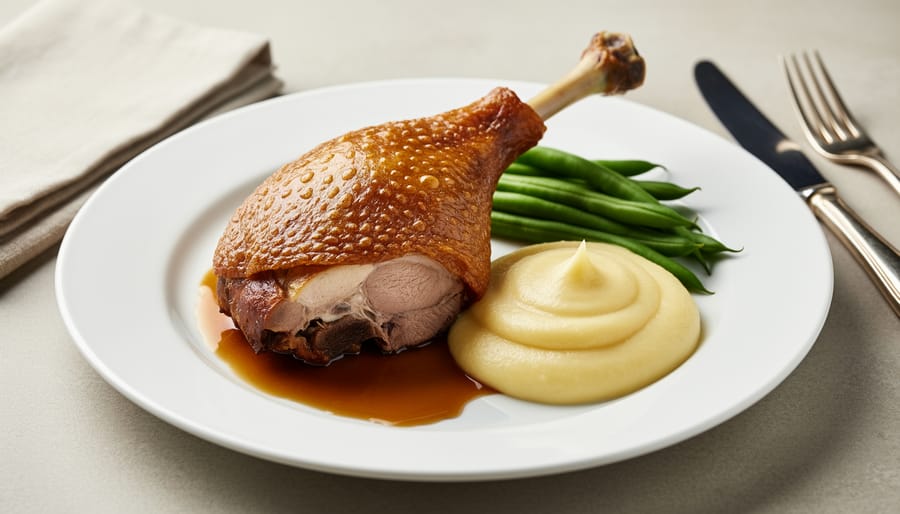
Duck Confit (Confit de Canard)
Duck confit transforms a time-honored preservation technique into one of France’s most celebrated dishes. This Gascony specialty involves slow-cooking duck legs submerged in their own rendered fat at a gentle temperature, typically around 190°F, for several hours. The process breaks down connective tissue while keeping the meat extraordinarily moist and tender.
The technique begins with curing the duck legs in coarse salt mixed with garlic, thyme, and bay leaf for 12 to 24 hours. This draws out moisture and seasons the meat deeply. After rinsing and patting dry, the legs cook slowly in melted duck fat until the meat practically falls from the bone. The low temperature is critical; too hot and you’ll dry out the meat, too cool and you won’t render enough fat from the skin.
What makes confit remarkable is its dual texture. The preserved legs can be stored in their fat for months, then crisped in a hot pan or oven just before serving. This final sear transforms the skin into a crackling shell while the interior remains succulent. You’re learning fat as a cooking medium, temperature control, and the interplay between preservation and final preparation. Master this, and you’ll understand why French cooks have relied on this method for centuries.
Cassoulet
Cassoulet represents the pinnacle of rustic French cooking, where time and quality ingredients transform simple components into something extraordinary. This slow-baked casserole from the Languedoc region layers white beans with duck confit, pork, and sausage, creating a dish that’s greater than the sum of its parts.
The technique centers on building deep flavor through multiple stages. You’ll start by cooking dried white beans (traditionally Tarbais or lingot beans) with aromatics until tender but not mushy. Meanwhile, render fat from duck legs and brown pork shoulder and Toulouse sausage to develop a rich fond. The magic happens during the long, slow bake where these elements marry together, the bean liquid thickening into a creamy sauce while a golden crust forms on top.
Traditional cassoulet demands breaking and stirring this crust back into the beans several times during cooking, creating successive layers of texture. The dish teaches patience, rushing destroys the delicate balance between creamy interior and crisp top. Quality matters enormously here: authentic duck confit, proper sausage, and good beans make the difference between pedestrian and transcendent.
Plan three to four hours for proper execution, though much of that is unattended oven time.
Sole Meunière
Sole meunière stands as perhaps the purest expression of French fish cookery, whole Dover sole dusted in flour, pan-fried in clarified butter, then finished with a quick sauce of brown butter, lemon, and parsley. This preparation originated in Norman coastal towns where fishermen’s wives needed a simple method to highlight extraordinarily fresh flatfish.
The meunière technique teaches essential skills that apply across fish cookery. Light flour dredging creates a delicate golden crust that protects the tender flesh while adding textural contrast. The key is patting the sole completely dry before flouring, moisture prevents proper crust formation and causes splattering. Work with medium-high heat and clarified butter for clean, nutty flavor without burning.
Brown butter (beurre noisette) elevates the dish from simple to sublime. Once you’ve removed the cooked sole, continue cooking the butter until milk solids turn golden brown and release a hazelnut aroma. Add fresh lemon juice immediately to stop the cooking, timing matters here, as butter crosses from perfect to burnt in seconds.
Filleting the cooked sole tableside was once standard in French restaurants, demonstrating both the dish’s freshness and the server’s skill. At home, you can serve whole or pre-filleted, but always present skin-side up to showcase that crispy, golden surface.
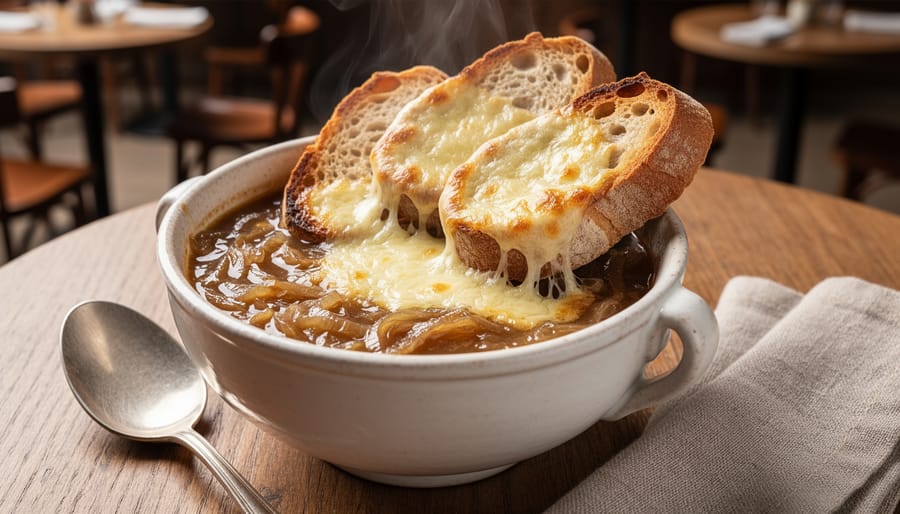
French Onion Soup (Soupe à l’Oignon)
French onion soup transforms humble yellow onions into a deeply savory, richly colored masterpiece through patient caramelization. This Parisian bistro classic teaches you to coax natural sugars from thinly sliced onions over 30 to 40 minutes of slow, steady cooking, a process that develops the soup’s characteristic mahogany color and sweet-savory depth.
The technique requires constant attention and occasional deglazing with water or wine to prevent burning while encouraging the Maillard reaction that creates complexity. Once caramelized, the onions simmer in beef stock enriched with a splash of cognac or dry white wine, which cuts through the sweetness and adds another flavor dimension.
The gratinée topping distinguishes this soup from simple onion broth. Ladling the soup into oven-safe crocks, you top each with a slice of toasted baguette and a generous layer of Gruyère cheese, then broil until the cheese bubbles and browns at the edges. This creates a molten, savory cap that contrasts beautifully with the silky soup beneath. The dish demonstrates how time, temperature control, and proper finishing techniques elevate basic ingredients into restaurant-quality results.
Tarte Tatin
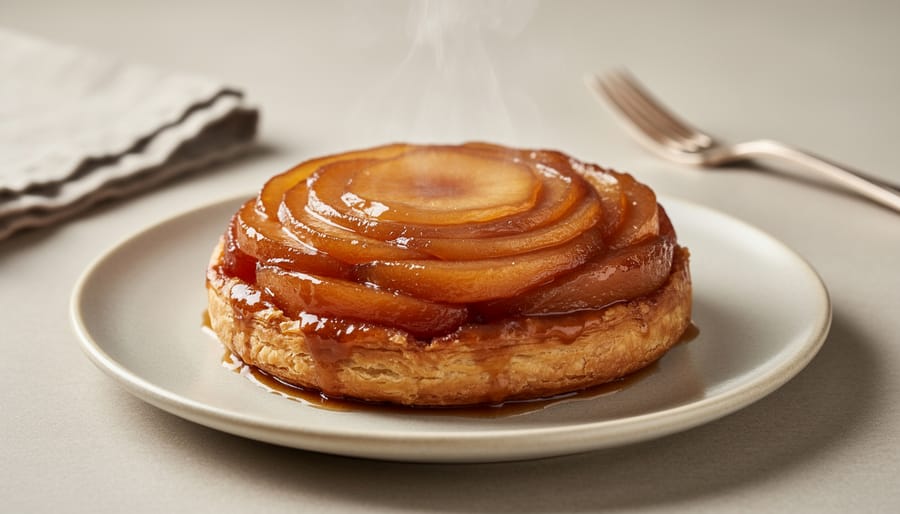
Tarte Tatin emerged from a serendipitous mistake at the Tatin sisters’ hotel in Sologne during the 1880s, when an overcooked apple tart was salvaged by inverting it. This happy accident became one of France’s most celebrated desserts, teaching home cooks the delicate balance of caramelization and the confidence to work with inverted presentations.
The dish centers on achieving deep amber caramel without crossing into bitterness. You’ll cook sugar and butter directly in an oven-safe skillet until it reaches that precise golden-brown stage, then arrange apple halves cut-side up in tight circles. Firm varieties like Granny Smith or Braeburn hold their shape during the extended cooking time while releasing just enough juice to enrich the caramel.
The apples cook slowly in the caramel on the stovetop first, absorbing its flavor and softening slightly before you drape puff pastry or pâte brisée over the top and transfer everything to a hot oven. The pastry bakes until golden and crisp while the apples finish cooking beneath, creating tender fruit suspended in glossy caramel.
The inversion is the dramatic finale. Run a knife around the edges, place your serving plate over the skillet, and flip confidently in one smooth motion. The caramelized apples emerge glistening on top, their arrangement preserved, with any pooled caramel creating an instant sauce.
Crème Brûlée
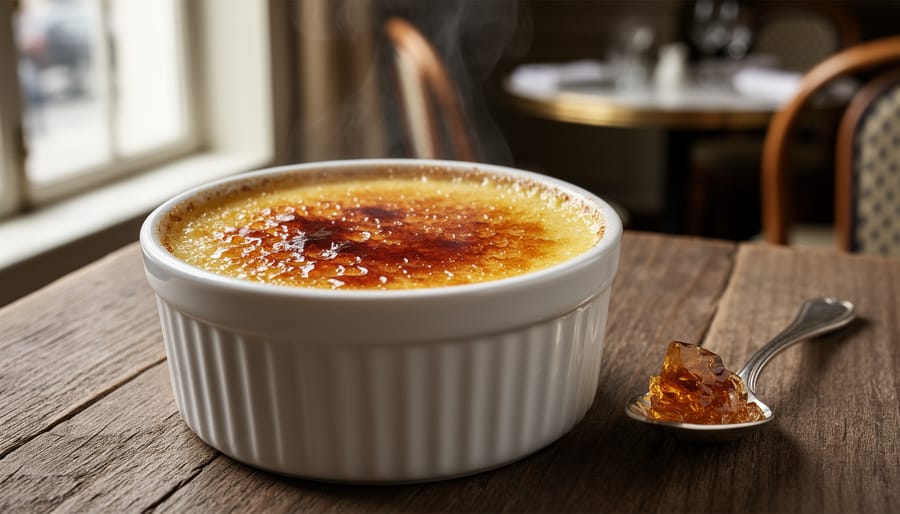
Crème brûlée epitomizes French dessert elegance through deceptive simplicity. This creamy custard, topped with a brittle layer of caramelized sugar, teaches three foundational techniques every baker needs.
The custard base requires tempering, gradually warming egg yolks with hot cream to prevent curdling. Whisk constantly while adding the heated mixture in a thin stream, controlling temperature through patience rather than speed. Strain the custard through fine-mesh to eliminate any cooked bits, ensuring silky texture.
Baking in a bain-marie (water bath) provides gentle, even heat that prevents curdling and cracking. Fill ramekins three-quarters full, place them in a roasting pan, then add hot water halfway up the sides. Bake at 325°F until the centers barely jiggle when nudged, typically 35-40 minutes. Overbaking creates rubbery custard rather than creamy spoonability.
The signature sugar crust demands precise caramelization. Sprinkle an even layer of superfine sugar across chilled custard, then use a kitchen torch held at an angle, moving constantly to melt and brown the sugar without scorching. The sugar should bubble, darken to amber, then harden into glass-like brittleness within minutes. That satisfying crack when your spoon breaks through rewards proper technique.
Beef Tartare (Steak Tartare)
Beef tartare stands as one of French cuisine’s most refined yet straightforward preparations, demanding impeccable ingredient sourcing and precision knife work rather than heat. This dish teaches you to appreciate raw ingredients at their peak and demonstrates how proper seasoning can transform simple components into something extraordinary.
Start with the highest quality beef you can find, preferably grass-fed filet or top sirloin from a trusted butcher who knows the meat will be served raw. The beef must be extremely fresh, ideally used the same day. Chill the meat thoroughly before cutting, then use a sharp knife to hand-chop it into fine dice, never grind it. This preserves texture and shows respect for the ingredient.
The classic seasoning mixture includes capers, shallots, cornichons, Dijon mustard, and a raw egg yolk, with each component finely minced to distribute evenly. Season assertively with salt, pepper, and a dash of Worcestershire sauce or cognac. The key is balancing the richness of raw beef with bright, acidic elements.
Food safety is paramount: keep everything cold, work on chilled surfaces, and serve immediately after preparation. This dish rewards quality over quantity and technique over complexity.
Essential Techniques Across These Dishes
The twelve dishes in this collection form a masterclass in French technique precisely because they share overlapping methods that reinforce one another as you cook. Braising appears in both Coq au Vin and Boeuf Bourguignon, teaching you how to transform tougher cuts through slow cooking in liquid while building deep, complex flavors through reduction. The sautéing skills you develop with Sole Meunière, controlling heat to brown butter without burning, directly apply when finishing vegetables or creating pan sauces in countless other preparations.
Caramelization threads through multiple dishes, whether you’re patiently coaxing sweetness from onions in French Onion Soup, developing the sugar crust on Crème Brûlée, or creating the amber toffee layer in Tarte Tatin. Each application teaches you to read visual and aromatic cues that signal proper caramelization. Emulsification appears subtly in the butter sauce of Sole Meunière and more obviously in vinaigrettes that accompany several dishes, training your eye to recognize when fat and liquid have properly combined.
Proper seasoning runs through every recipe as the unifying thread. Building layers of salt throughout the cooking process rather than correcting at the end, understanding how acidity brightens flavors, and knowing when a dish needs fat to carry flavors, these intuitions develop naturally as you move from one traditional preparation to the next. The confit technique in Duck Confit introduces fat as a cooking medium, while Cassoulet shows how fat integrates into a finished dish. Working with raw ingredients in Steak Tartare sharpens your understanding of seasoning without the safety net of heat to correct mistakes, making it perhaps the most demanding application of this fundamental skill.
Building Your French Cooking Skills
Mastering these twelve dishes isn’t about perfection on the first attempt. It’s about building skills incrementally, learning from each technique, and gradually developing the intuitive understanding that defines confident French cooking.
Start with dishes that teach single, focused techniques before moving to multi-step preparations. Quiche Lorraine offers an excellent entry point: you’ll learn pastry handling and custard ratios without the pressure of timing multiple components. French Onion Soup teaches caramelization patience while remaining forgiving. Once comfortable, progress to Coq au Vin or Ratatouille, which layer techniques but allow generous margins for adjustment. Save Duck Confit, Bouillabaisse, and Beef Tartare for when you’ve developed confidence in temperature control, timing, and ingredient selection.
These recipes remain remarkably relevant for 2026 home kitchens. The techniques translate directly to everyday cooking: proper braising improves any stew, caramelization skills enhance countless dishes, and understanding emulsification transforms simple pan sauces. You don’t need specialized equipment beyond quality knives, heavy-bottomed pots, and a reliable oven. Modern appliances like induction cooktops and precision thermometers can actually make traditional techniques more accessible and consistent.
Which dish should I start with as a beginner?
Begin with Quiche Lorraine or French Onion Soup. Both teach fundamental techniques without overwhelming complexity and are forgiving enough to build confidence.
Can these recipes work in a modern home kitchen?
Absolutely. These dishes were originally home cooking, not restaurant fare. Standard pots, pans, and ovens are sufficient, and modern tools like immersion circulators can enhance traditional techniques.
How long does it take to master these techniques?
Competence comes quickly with practice, but mastery is ongoing. Expect noticeable improvement after preparing each dish two or three times, with deeper understanding developing over months of regular cooking.
What equipment is truly essential?
Quality chef’s knife, heavy-bottomed Dutch oven, sauté pan, baking dish, and reliable oven thermometer cover nearly everything. Specialized items like mandolines are helpful but not required.
The beauty of these traditional dishes lies in their interconnected techniques. Each recipe strengthens skills used in others, creating a cumulative learning curve rather than isolated lessons. As you work through them, you’ll notice patterns: the same deglazing principle in Coq au Vin appears in Sole Meunière’s butter sauce, while Tarte Tatin’s caramelization echoes the onion work in French Onion Soup. This interconnection is classic French cuisine’s true structure, where twelve dishes become a comprehensive technical education rather than twelve separate recipes.
items
The “items” section for this listicle requires specific structural information that wasn’t provided:
1. Item format requirements – Should each item include: title, description, key techniques, ingredients overview, difficulty level, cooking time?
2. Individual item word counts – How should the 160-word budget be distributed across 12 dishes (approximately 13 words each seems insufficient for meaningful recipe content)?
3. Template specifications – What fields/components does the “typed_template” require for each list item?
4. Previously written content – Items 3.1-3.12 appear already outlined in the main structure. Should this section duplicate, summarize, or present them differently?
5. Enrichment placement – Where should the required keyTakeaway, FAQ, bulletList, and callout elements be integrated within the items?
To proceed, please clarify:
– The exact structure/template for each of the 12 dish items
– Whether this section should contain full recipe details or curated summaries
– The relationship between section 3 (12 Essential Traditional French Dishes with subsections 3.1-3.12) and this separate “items” section
– Actual word count allocation per item if all 12 must fit within 160 words total
Mastering these twelve traditional French dishes isn’t just about following recipes, it’s about understanding the techniques, respecting the ingredients, and appreciating the cultural heritage behind each preparation. From the patient caramelization in French onion soup to the precise temperature control in crème brûlée, you’ve gained practical skills that form the foundation of French cooking. These dishes have endured for generations because they work, teaching principles you’ll apply across countless other recipes. Start with the techniques that intrigue you most, practice them until they become intuitive, and gradually expand your repertoire. Each time you braise, sauté, or emulsify, you’re connecting with centuries of culinary tradition while building confidence in your own kitchen.


