 rosendo
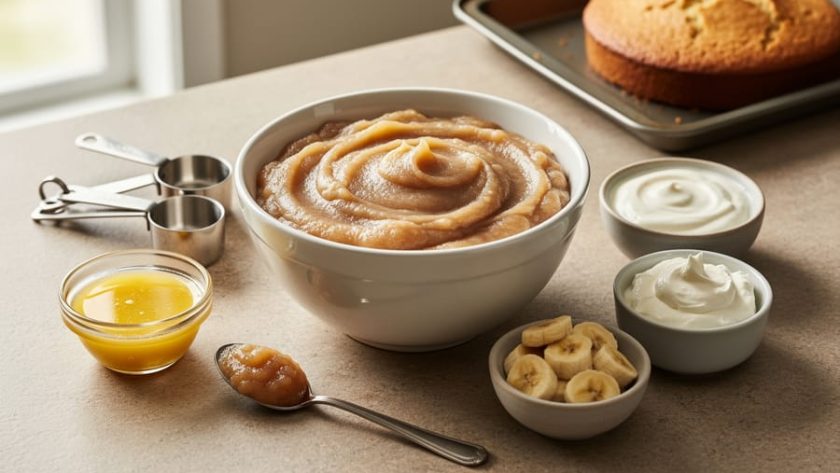
Out of oil mid-bake? Melted butter is the best swap, and you can use it one for one. Measure the same volume, let it cool slightly, and you’ll get a richer flavor and a finer crumb than oil ever gives. If butter doesn’t suit the cake or the diet, unsweetened applesauce, plain yogurt, mashed ripe banana, sour cream or crème fraîche, pureed avocado, and nut butter all work, usually at the same ratio, though each shifts the texture, sweetness, or density in its own way.
Why it works: oil contributes moisture and softness, so any replacement has to supply fat, water, or both. Butter and crème fraîche lean on fat for tenderness. Applesauce, yogurt, and banana lean on moisture and natural sugars. Avocado and nut butter bring creaminess and body. French pastry cooks have long swapped these ingredients to suit the cake rather than the other way around.
Below, you’ll find the full list of alternatives to cooking oil with exact quantities, what to expect from each, and how to choose fast.
What Oil Does in a Cake and How These Seven Substitutes Were Chosen
In a cake, oil does three jobs. It coats the flour proteins, which limits gluten development and keeps the batter from turning chewy. It holds moisture long after baking, so slices stay soft for days. And it gives the crumb its soft, even texture. Any substitute has to cover at least two of those jobs, or the cake will bake up dry, tough or gummy.
That is why this list is not a random pantry sweep. Each of the seven options was weighed against the same five criteria:
- Fat and moisture content, since a replacement must supply both tenderness and hydration.
- Flavor influence, meaning how much the substitute shows up in the finished cake.
- Crumb and texture outcome, from fine and velvety to dense and fudgy.
- Pantry availability, so you can act mid-bake without a store run.
- Ease of substitution, or how reliably it swaps into a standard oil-based recipe.
Melted butter and sour cream score high on richness, while applesauce and banana lean on moisture and natural sweetness. Yogurt sits in between, adding tenderness through acidity. Avocado is nearly neutral in taste, and nut butter brings the strongest personality.
One caution before we begin. The ratios in this guide come from technique-based reasoning about how fat, water and acid behave in batter, not from a single tested recipe. Your cake’s sugar level, flour type and leavening will all shift the outcome, so treat each ratio as a dependable starting point and adjust from there.
Seven Cooking Oil Alternatives for Cake, From Closest Match to Lightest Option
1. Melted Butter, for Rich Flavor and a Fine Crumb
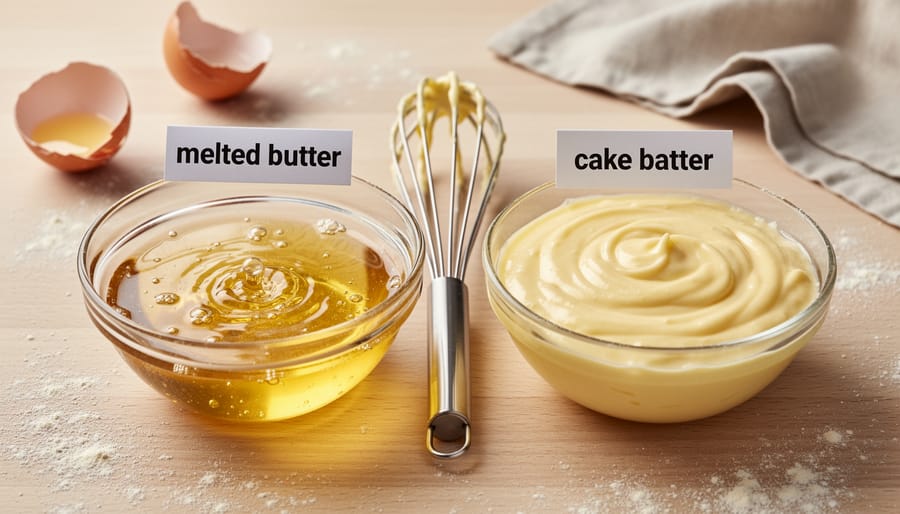
Melted butter is the closest match to oil in a cake, and it brings flavor that oil simply cannot. Swap it in at a 1:1 ratio by volume, then add roughly a tablespoon extra for every cup, since butter contains about 15 to 18 percent water and milk solids that oil lacks. That small addition keeps the crumb from drying out.
For deeper flavor, take the butter to beurre noisette. Cook it gently over medium heat until the milk solids turn golden and smell of toasted hazelnuts, then pull it from the heat. This is the classic French technique behind financiers, and it lends a nutty depth to even a plain vanilla batter. Remember that browning evaporates some water, so weigh or measure the butter after it has browned and cooled.
Always let melted butter cool until it is warm rather than hot before folding it into the batter. Hot butter can scramble the eggs and cause a greasy, uneven texture.
One thing to expect: butter solidifies as the cake cools, so the crumb will feel slightly firmer than an oil-based cake. Serve at room temperature for the most tender bite. This substitute shines in pound cakes, financiers, and vanilla or spice cakes.
2. Unsweetened Applesauce, for a Moist, Lower-Fat Cake
Unsweetened applesauce is the most forgiving fruit purée to bake with, and it earns its place in the pantry for a good reason. Its water content hydrates the batter, while its natural pectin helps hold that moisture in the crumb as the cake cools.
Start by replacing half the oil with an equal volume of applesauce and keep the rest as oil. That keeps enough fat to coat the flour proteins and protect the structure. You can swap the full amount 1:1, but the crumb tends to turn denser and slightly gummy, because applesauce coats flour far less effectively than fat does.
Because applesauce adds a little natural sweetness, you can trim the sugar by a tablespoon or two per cup of purée. Choose a smooth, unsweetened variety so you control the sugar yourself.
This swap shines in spice, carrot and chocolate cakes, where bold flavors welcome the gentle fruitiness. Bake a few minutes longer than the recipe suggests, and check with a skewer, since a moister batter can look set before the center is done.
3. Plain Yogurt, for Tenderness and a Gentle Tang
Swap plain yogurt for cooking oil at a 1:1 ratio, and choose full-fat yogurt whenever you can. The fat in whole-milk yogurt keeps the cake from drying out, while lower-fat versions tend to give a slightly leaner, bouncier crumb.
What sets yogurt apart is its acidity. The lactic acid softens gluten strands as the batter rests and bakes, which is why yogurt cakes have such a fine, tender texture. That acidity also reacts with baking soda, producing extra lift. If your recipe already calls for baking soda, you may notice a livelier rise. If it relies only on baking powder, keep the quantities as written.
Greek yogurt is much thicker, so loosen it with a tablespoon or two of milk per cup until it pours like heavy cream. Otherwise the batter can turn stiff and the cake heavy.
The gentle tang flatters bright, delicate flavors, so yogurt shines in lemon cakes, vanilla loaves and olive-oil-style cakes. Bring it to room temperature before mixing so it blends smoothly with the eggs and sugar.
4. Mashed Ripe Banana, for Natural Sweetness and Body
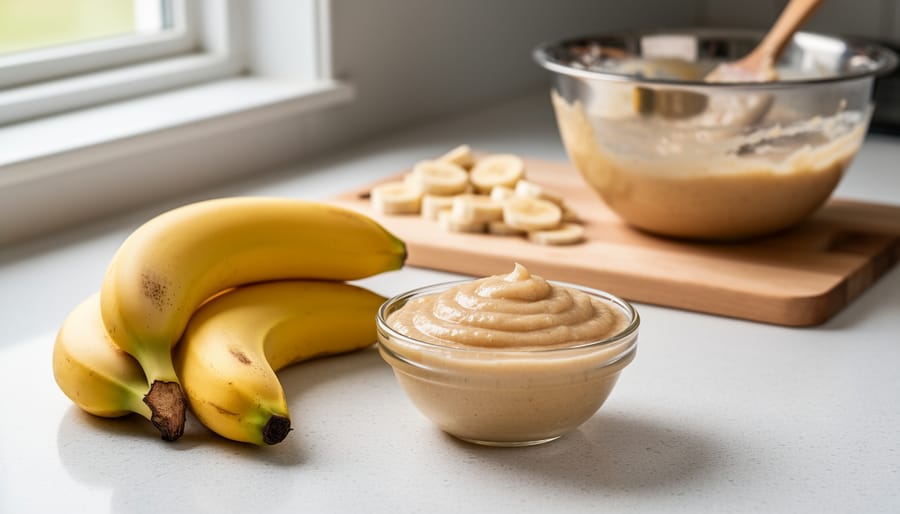
Mashed ripe banana replaces oil at a 1:1 ratio by volume, so one cup of oil becomes one cup of mashed fruit. Choose bananas with heavily speckled or even blackened skins. At that stage the starch has converted to sugar, giving you a smoother mash and a deeper, rounder sweetness. Because the fruit brings its own sugar, trim the recipe’s sugar by about a quarter, then adjust the next time based on how the cake tastes.
Banana does more than add moisture. Its flavor is unmistakable, and its pulp and natural pectin create a denser, softer, slightly springy crumb rather than the open, light texture oil produces. That body is a strength in the right recipe. Banana, chocolate and spice cakes welcome the extra weight and the fruity warmth, which pairs well with cocoa, cinnamon and nutmeg.
Avoid it in delicate sponges and chiffon-style cakes, where the heavier crumb and assertive flavor would overwhelm their lightness. Mash the fruit until nearly smooth so no stringy pieces disturb the cake.
5. Sour Cream or Crème Fraîche, for a Luxurious, Velvety Crumb
Swap sour cream or crème fraîche for the oil at a 1:1 ratio by volume, and you’ll get one of the most tender, velvety crumbs on this list. Crème fraîche has deep roots in French pastry kitchens, where cultured cream has long been used to enrich batters and doughs, and sour cream behaves almost identically in the mixing bowl.
Two things happen at once. The butterfat coats the flour proteins, limiting gluten development much as oil does, so the cake stays soft rather than chewy. The lactic acidity then relaxes the crumb further and reacts with baking soda for a gentle, even lift. The result is a moist cake with a faint, pleasant tang that sits well beneath sweetness.
Choose full-fat versions, since low-fat sour cream contains more water and gives a less rich result. Bring it to room temperature first so it blends smoothly with the eggs and sugar, and fold it in at the end to avoid overmixing.
This swap shines in chocolate, coffee and layer cakes, where the richness deepens flavor and keeps stacked tiers moist for days.
6. Pureed Avocado, for a Neutral-Tasting, Creamy Replacement
Pureed avocado is one of the most underrated swaps for cooking oil in cake. Use a 1:1 ratio, measuring by volume, and blend the flesh until it is completely smooth, with no flecks or lumps that could leave green streaks in the finished crumb.
Avocado is rich in monounsaturated fat, the same type of fat found in olive oil, so it coats the flour proteins and keeps the cake moist and tender much as oil does. Its flavor is mild and slightly buttery, which lets other ingredients such as cocoa, coffee or vanilla remain in the foreground.
The one drawback is color. In a pale batter, avocado can leave a faint green cast, so reserve it for chocolate, devil’s food, red velvet and other dark cakes, where the tint disappears completely.
Technique tip: choose a ripe avocado that yields gently to pressure, and purée it just before mixing, since the flesh oxidizes and browns quickly once exposed to air.
7. Nut Butter, for a Dense, Fragrant Cake
Nut butter turns a cake dense and fragrant, so choose it when you want that character rather than a light, airy sponge. Use smooth almond or peanut butter, never the chunky kind, and loosen it first. Whisk the nut butter with a little warm water or milk until it pours like thick cream, then measure out about 3/4 of the oil volume the recipe calls for. If the recipe asks for 1/2 cup oil, use roughly 6 tablespoons of thinned nut butter.
The flavor comes through clearly, which is the point. Almond butter adds a gentle marzipan note, while peanut butter gives a more assertive, toasted depth. Because the fat and protein are concentrated, the crumb turns tighter and fudgier than it would with oil.
This swap suits flourless-style cakes, chocolate cakes and brown-butter-style bakes, where the nutty richness reinforces what is already there. Skip it for delicate vanilla sponges, where it would overpower the flavor.
Choosing the Right Substitute at a Glance
Use this quick guide to match the substitute to your cake. Ratios are by volume of oil replaced.
– Melted butter: 1:1, plus a touch extra. Rich, nutty flavor and a fine crumb that firms slightly as it cools. Best for pound cakes, financiers and spice cakes.
– Unsweetened applesauce: 1:1, or replace half the oil. Mild apple note, very moist but denser at full replacement. Best for carrot, spice and chocolate cakes.
– Plain yogurt: 1:1, full-fat preferred. Gentle tang and a tender crumb. Best for lemon and vanilla cakes.
– Mashed ripe banana: 1:1. Pronounced banana flavor, dense and sweet. Best for banana, chocolate and spice cakes.
– Sour cream or crème fraîche: 1:1. Subtle richness, velvety crumb. Best for chocolate, coffee and layer cakes.
– Pureed avocado: 1:1, smooth purée. Neutral flavor, creamy texture, possible green tint. Best for chocolate and dark cakes.
– Nut butter: About 3/4 the volume, thinned with warm water or milk. Pronounced nutty flavor, dense and fragrant. Best for chocolate and brown-butter-style cakes.
Technique Tips for Swapping Oil Without Sacrificing Structure
Swapping oil gets easier once you treat it as a set of repeatable habits rather than a one-off gamble. Follow these steps each time and the results become predictable.
1. Substitute gradually. Replace half the oil on your first attempt, then move to a full swap once you know how the batter behaves.
2. Bring dairy and eggs to room temperature. Yogurt, sour cream, crème fraîche and eggs blend smoothly when they are not cold, which gives an even, tender crumb.
3. Avoid overmixing. Stir only until the flour disappears. Extra mixing develops gluten, and substitutes with less fat have little to protect the crumb.
4. Adjust the baking time. Fruit purées and yogurt add moisture, so check the cake five to ten minutes before the recipe says it should be done.
5. Test doneness with a skewer. Insert it at the center; a few moist crumbs are fine, but wet batter means it needs longer.
If you are nervous about a full replacement, try a half-and-half approach: pair applesauce or banana with a tablespoon or two of oil, or melted butter with yogurt. You keep much of the richness while testing a new texture.
Each test bake teaches you something about how a given cake responds, and that accumulated experience is what turns a careful substitution into confident, instinctive baking.
Common Questions About Replacing Oil in Cake
Most of these questions come up once the first substitute is in the bowl, so here are quick, technique-based answers.
Can I swap vegetable oil for olive or coconut oil?
Yes, 1:1 by volume. Use a mild olive oil so its peppery edge doesn’t dominate, and melt coconut oil and cool it slightly so it doesn’t seize against cold eggs or milk.
Do boxed cake mixes accept these substitutes?
They do. Yogurt, applesauce, sour cream and cooled melted butter all swap 1:1 for the oil on the box, though fruit purées give a denser, more tender crumb.
How do substitutes affect shelf life?
Fruit purées keep a cake moist longer but make it more perishable, while butter-based cakes firm up as they cool. Store anything made with dairy or fruit covered, and refrigerate it after a day.
How do I make these swaps dairy-free?
Choose applesauce, mashed banana, pureed avocado or nut butter, which contain no dairy. For butter or yogurt, use a plant-based version of the same fat content.
Lower-fat swaps like applesauce can slightly reduce lift, so avoid replacing all the fat at once; start with half if the rise matters. The same logic applies when you want to replace oil in brownies where texture is just as sensitive. For more on equipment that makes these adjustments easier, see our guide to baking tool innovations.
The best substitute depends on the cake in front of you. Melted butter and plain yogurt are the most dependable for a tender crumb, while fruit purées like applesauce and banana trade some richness for moisture. Bake a small test batch or a few cupcakes before committing a full cake, because that quiet habit builds the instinct that defines a confident baker. When you’re ready to experiment further, explore healthier oil swaps and our other Alternative Cooking Oils guides.