 rosendo
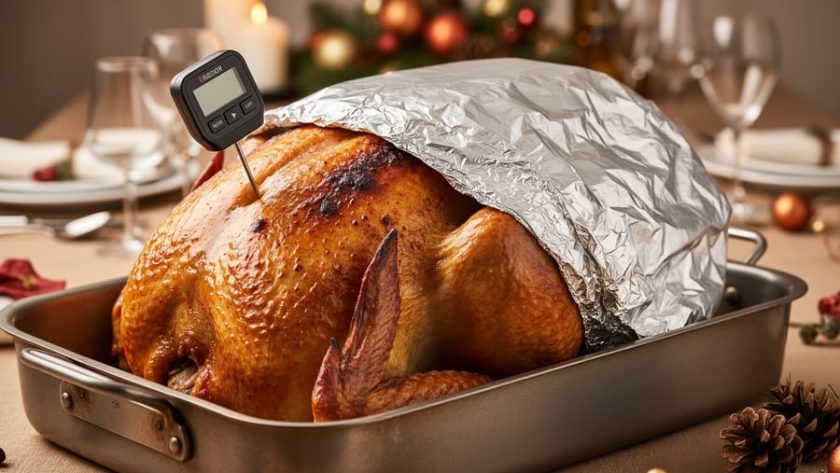
Roasting a perfectly golden, juicy turkey comes down to three essential numbers: a safe internal temperature of 165°F, an oven set to 325-350°F, and a cooking time of 13-15 minutes per pound for an unstuffed bird or 15-20 minutes per pound for a stuffed one. These benchmarks ensure your centerpiece holiday roast reaches food-safe doneness without sacrificing moisture or tenderness. Success hinges on precision, not guesswork. The internal temperature must reach 165°F in the innermost part of the thigh and wing, verified with a reliable food thermometer, not the pop-up indicator that often comes pre-installed.
Understanding the relationship between time, temperature, and size transforms turkey roasting from a stressful gamble into a controlled technique. A 14-pound unstuffed turkey at 325°F typically requires 3 to 3½ hours, but weight alone doesn’t tell the whole story. Oven calibration, bird starting temperature, and even roasting pan depth influence timing. That’s why the thermometer reading becomes your ultimate authority. French culinary tradition teaches us to respect the precision of measurement, particularly when the margin between succulent breast meat and dry disappointment is only a few degrees. The goal is to bring every part of the bird to safe doneness simultaneously, which requires strategic placement of your thermometer and an understanding of where heat penetrates last.
Essential Tools and Equipment for Accurate Turkey Roasting
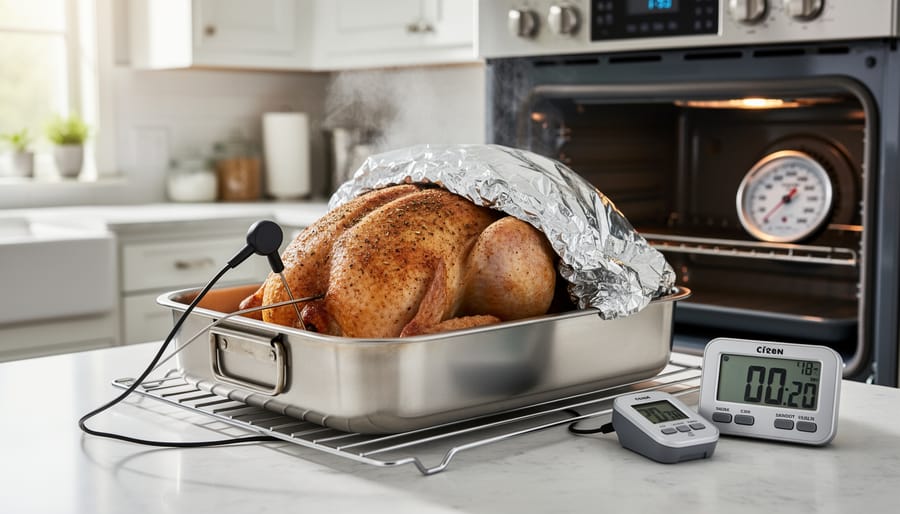
Mastering turkey roasting begins with assembling the right equipment, precision tools that transform temperature guidelines into consistent, safe results. The French culinary tradition prizes exactitude, and your toolkit should reflect that commitment to accuracy and control.
Food Thermometer: Your Non-Negotiable Ally
A reliable instant-read or probe thermometer is the single most critical tool for turkey roasting. Choose a digital model that reads within 2-3 seconds and displays temperatures clearly to at least 165°F. Dial thermometers work but respond more slowly, which matters when you’re checking multiple spots. The thermometer must reach the innermost part of the thigh and wing without touching bone, bone conducts heat differently than meat and gives false readings. For stuffed birds, you’ll also need to verify the stuffing center reaches 165°F, making a probe thermometer with a long stem particularly useful. Without accurate temperature measurement, you’re guessing, and guesswork has no place in technique-driven cooking.
Roasting Pan and Rack
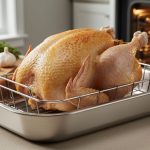
A heavy-duty roasting pan with a flat or V-shaped rack elevates the turkey, allowing hot air to circulate underneath for even cooking. The rack prevents the bottom from steaming in accumulated juices, which would result in soggy skin and uneven heat distribution. Pans should be 2-3 inches deep to contain drippings without smoking, and sturdy enough to support a 12-20 pound bird. Investing in better roasting tools pays dividends in consistent results season after season.
Essential and Optional Equipment Checklist
- Heavy aluminum foil for tenting the breast if it browns too quickly while thighs finish cooking
- Oven-safe meat thermometer that remains in the bird during roasting for continuous monitoring
- Bulb baster or large spoon for redistributing pan juices, though this step is optional
- Kitchen twine for trussing legs together, promoting compact shape and even heat exposure
- Sharp carving knife and sturdy cutting board for safe handling after the essential 15-20 minute rest
Each tool serves temperature control and even cooking. The rack ensures air flow, foil moderates browning rates, and the thermometer removes all doubt about doneness. Precision equipment supports precision outcomes, the foundation of culinary confidence.
Critical Safety Guidelines Before You Begin
Food safety is not a mere formality, it is the foundation of culinary excellence. A perfectly timed, beautifully browned turkey becomes a health hazard if mishandled or undercooked, and no amount of technique can redeem unsafe practice.
Start with proper thawing, which demands patience and planning. The refrigerator method is safest: allow 24 hours of thawing time for every four to five pounds of turkey, placing the bird breast-side up in its original wrapper on a tray to catch drips. A 16-pound turkey needs four full days. If time is short, use the cold water method: submerge the wrapped turkey in cold tap water, changing the water every 30 minutes, and plan on 30 minutes per pound. Never thaw at room temperature, where bacteria multiply rapidly in the danger zone between 40°F and 140°F.
Handle raw turkey with care to prevent cross-contamination. Wash your hands, cutting boards, utensils, and countertops with hot soapy water after contact with raw poultry. Keep the turkey and its juices away from ready-to-eat foods. Pat the bird dry with paper towels, not cloth towels that can harbour bacteria.
After roasting, let the turkey rest for 15 to 20 minutes before carving. This resting period allows juices to redistribute, ensuring moist meat, while carryover cooking may raise the internal temperature by five to ten degrees. Use that time to prepare your serving platter and carving station, never skip this step in pursuit of speed.
Understanding Turkey Cooking Times by Weight and Preparation
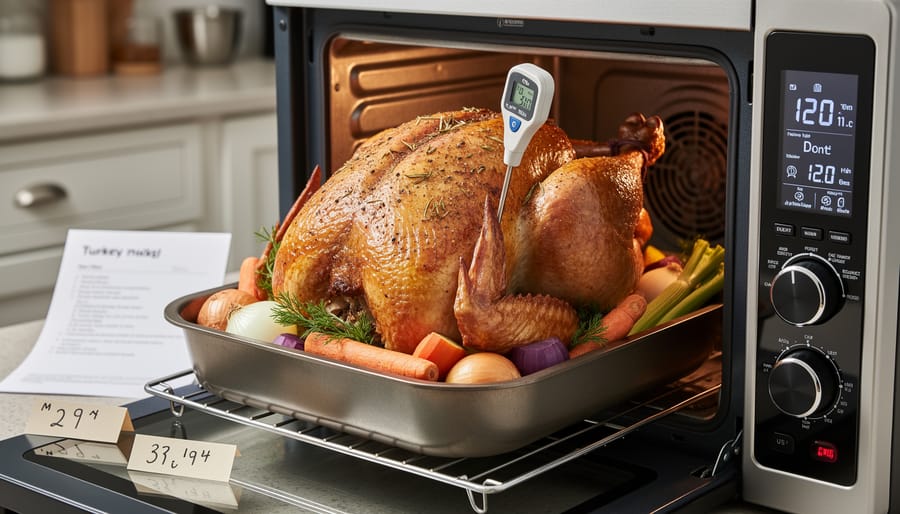
Time calculations form the practical framework for roasting success, though temperature remains your ultimate guide. For a standard 325-350°F oven, plan roughly 13-15 minutes per pound for an unstuffed turkey and 15-20 minutes per pound for a stuffed one. These ranges provide a reliable starting estimate, but multiple factors influence actual roasting duration, understanding them helps you calculate cooking time with greater precision.
Weight directly determines total roasting time. An 8-12 pound unstuffed turkey typically requires 2.5 to 3 hours at 325°F, while the same bird stuffed needs 3 to 3.5 hours. A 12-16 pound unstuffed turkey roasts for approximately 3 to 4 hours, extending to 3.5 to 4.5 hours when stuffed. Larger birds demand proportionally more time: a 16-20 pound unstuffed turkey takes 4 to 4.5 hours, or 4.5 to 5.25 hours stuffed. Turkeys exceeding 20 pounds need 4.5 to 5 hours unstuffed, stretching to 5.5 to 6.25 hours with stuffing. These windows assume consistent oven performance and proper preparation.
Stuffing adds substantial time because the cavity filling insulates the interior, slowing heat penetration to the innermost meat. The stuffing center itself must reach 165°F for safety, which often requires the surrounding meat to cook longer. If your schedule is tight, roast stuffing separately in a casserole dish, it cuts roasting time and reduces risk.
Starting temperature matters considerably. A turkey brought to room temperature for 30-60 minutes before roasting cooks faster than one placed directly from refrigerator to oven. The difference can shorten total time by 20-30 minutes on a medium bird. However, never leave poultry at room temperature beyond one hour for food safety reasons.
Oven variance introduces unpredictability. Home ovens often run 10-25 degrees hotter or cooler than the set temperature, and convection models circulate heat differently than conventional ones. Older ovens may have hot spots or inconsistent heating elements. These variables make timing estimates just that, estimates. Always rely on your thermometer reading of 165°F in the thigh, not the clock alone, to confirm doneness.
Step-by-Step Temperature-Controlled Roasting Process
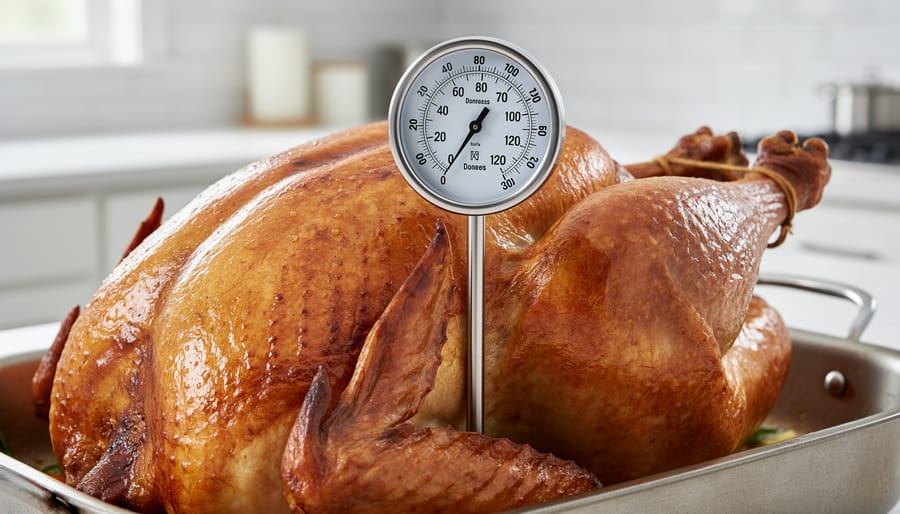
Begin by setting your oven to 325-350°F and allowing it to preheat fully, a step that establishes the stable, even heat required for consistent roasting. French technique emphasizes controlled heat as the foundation of good cooking, and turkey responds best when placed into an oven that has already reached and stabilized at your chosen temperature.
- Preheat your oven to 325-350°F, ensuring it reaches full temperature before the turkey goes in. Lower temperatures produce moister meat but require longer cooking, while 350°F shortens the process slightly with minimal texture trade-off.
- Remove the turkey from refrigeration and let it rest at room temperature for 30-45 minutes to promote even cooking. Pat the skin thoroughly dry with paper towels, season as desired, and position the bird breast-side up on a roasting rack set inside a shallow roasting pan. The rack allows heat circulation underneath, preventing the bottom from steaming in accumulated juices.
- Place the turkey in the center of the preheated oven and begin the initial roasting phase. If you notice rapid browning within the first hour, tent the breast loosely with aluminum foil to shield the skin while the interior continues cooking. Remove the foil during the final 30-45 minutes to achieve golden, crisp skin.
- Monitor the roasting process by basting every 45-60 minutes with pan drippings or melted butter, though this step is optional. Basting adds flavor and promotes browning, but frequent oven door openings reduce heat efficiency. Prioritize oven temperature stability over excessive intervention.
- Insert an instant-read or probe food thermometer into the innermost part of the thigh, angling toward the body without touching bone, which conducts heat and gives false high readings. The thigh is the last part to reach safe temperature. Also check the thickest part of the breast and the wing joint. For turkey breast temp aim for 165°F as well, though breast meat may reach target slightly before the thigh.
- If your turkey is stuffed, insert the thermometer into the center of the stuffing cavity after checking the meat. Stuffing must also reach 165°F to be safe, as it absorbs raw turkey juices during roasting. This additional mass extends cooking time by several minutes per pound.
- When all checked areas register 165°F on your thermometer, remove the turkey from the oven immediately. Timing estimates provide a framework, but the thermometer delivers the definitive verdict on doneness. A 12-pound unstuffed bird typically requires 2.5-3 hours at 325°F, yet oven variance and starting temperature can shift this window.
- Transfer the turkey to a cutting board or serving platter and tent loosely with foil. Rest for 15-20 minutes before carving. During this resting period, residual heat redistributes juices throughout the meat and internal temperature may rise an additional 5-10°F through carryover cooking, further ensuring safety and moisture retention.
The thermometer technique separates competent cooks from those who rely on guesswork. Bone contact, shallow insertion, or checking only one location can all produce misleading readings. Verify multiple sites, understand that the thigh is your primary checkpoint, and trust the instrument over visual cues or timing charts. This disciplined approach transforms turkey roasting from an anxious gamble into a controlled, repeatable process rooted in the precision that defines French culinary tradition.
How to Verify Perfect Doneness and Troubleshoot Common Issues
Confirming perfect doneness requires checking multiple points with your food thermometer, not relying on a single reading. Insert the thermometer into the innermost part of the thigh without touching bone, this is the slowest-cooking area and your primary safety checkpoint. Then verify the deepest part of the breast and the wing joint; all must register 165°F. If you stuffed the bird, probe the center of the stuffing cavity as well, ensuring it also reaches 165°F. Visual cues support but never replace temperature: juices should run clear when the thigh is pierced, and the meat should feel firm rather than spongy.
When parts cook unevenly, a common issue in home ovens with hot spots, rotation and targeted shielding solve the problem without compromising the properly cooked portions. If the breast approaches 165°F while the thighs remain undercooked, tent the breast loosely with foil and raise the oven temperature slightly to 350°F, focusing heat on the dark meat. Dry breast meat signals overcooking or insufficient moisture protection; prevent this by tenting earlier in the roast or lowering your oven to 325°F for gentler heat. If your turkey finishes faster than expected and guests aren’t ready, tent it fully and let it rest in a warm spot, carryover cooking will hold it safely above 140°F for up to 45 minutes. Conversely, if timing falls short, verify with the thermometer rather than guessing; an extra 20 minutes at proper temperature is far better than serving undercooked poultry.
Advanced Techniques for Optimal Texture and Flavor
Once you’ve mastered the fundamental time and temperature guidelines, several French-inspired techniques can transform a competently roasted turkey into an exceptional centerpiece. These methods work in concert with precise temperature monitoring to deliver moist, flavorful meat with professional-quality texture.
Dry-brining stands as one of the most effective moisture-retention strategies. Salt the turkey generously 24-48 hours before roasting, then refrigerate uncovered. The salt penetrates deeply, seasoning the meat while breaking down proteins to retain juice during cooking. The exposed skin simultaneously dries, promoting superior browning and crispness when it meets the oven’s heat.
Placing aromatics, fresh thyme, rosemary, quartered onion, lemon halves, crushed garlic, inside the cavity infuses subtle fragrance throughout the bird without the food-safety complications of traditional bread stuffing. These aromatics release moisture and flavor as they heat, creating an aromatic steam that works from the interior outward.
Working softened butter or herb compound under the breast skin creates a protective, flavor-rich layer directly against the meat. Gently separate the skin from the flesh with your fingers, then spread the butter evenly. This insulation helps the delicate breast tissue stay moist while the darker thigh meat reaches full doneness at 165°F.
Understanding oven heat zones and applying heat-control basics allows you to manage uneven cooking. Rotate the pan halfway through roasting, and tent the breast with foil if it browns too quickly while the thighs lag behind.
Finally, respect the resting period. Allowing the turkey to rest 15-20 minutes after reaching temperature permits carryover cooking, the internal temperature may climb 5-10°F, while juices redistribute throughout the meat. Patience during this phase ensures every slice delivers maximum moisture and flavor.
Frequently Asked Questions
Should you roast at 325°F or 350°F? Both temperatures work, but each offers trade-offs. The 325°F approach delivers more even cooking and reduces the risk of drying out the breast meat before the thighs reach temperature, making it ideal for larger birds or when precision matters most. At 350°F, you’ll shorten overall roasting time by 10-15%, which helps on a tight schedule, but you must monitor more carefully to prevent overcooking the exterior while the interior climbs to 165°F. Choose based on your timeline and comfort level with active temperature management.
How do I know when my turkey is done without overcooking it?
Insert an instant-read thermometer into the innermost part of the thigh and wing, avoiding bone, and look for 165°F, timing alone is an estimate, not a guarantee. The thermometer gives you real-time accuracy, so you can pull the bird exactly when it reaches the safe minimum rather than relying on a clock that doesn’t account for oven variance or starting temperature.
Can I cook a frozen turkey safely?
Yes, but it requires roughly 50% more time than a fully thawed bird and you cannot stuff it. Start at 325°F, and verify doneness with a thermometer in multiple locations, as frozen roasting creates more uneven heat distribution.
Does stuffing really add that much cooking time?
Absolutely, a stuffed turkey needs 15-20 minutes per pound compared to 13-15 for an unstuffed bird, because the cavity’s center must also reach 165°F. That density slows heat penetration, extending roasting by 30-60 minutes depending on size.
What if my thermometer shows different readings in different spots?
Check the innermost thigh, the wing joint, and the thickest part of the breast, then go by the lowest reading in the highest-risk areas, the thigh and stuffing center if applicable. When those spots hit 165°F, the turkey is safe even if the breast reads slightly higher.
If your oven runs hot or cold, calibrate your approach after the first roast. An oven thermometer reveals true cavity temperature, letting you adjust the dial to maintain the intended 325-350°F range rather than trusting the built-in gauge. Over time, you’ll learn your equipment’s quirks and refine timing estimates, but the food thermometer remains your non-negotiable standard. Mastering these nuances turns troubleshooting into second nature, so each successive turkey emerges more consistent than the last.
Mastering turkey cooking times and temperatures comes down to one non-negotiable standard: 165°F internal temperature in the innermost part of the thigh, wing, and stuffing center. This is the definitive measure of safety and doneness, verified every time with a reliable food thermometer. Time-per-pound guidelines, 13 to 15 minutes per pound for unstuffed birds, 15 to 20 minutes for stuffed ones at 325°F, serve as helpful estimates, but they cannot replace direct temperature measurement. Ovens vary, bird shapes differ, and starting conditions shift timing. Your thermometer tells the truth.
Approach your next turkey roast with confidence. You’ve learned the tools, the safety protocols, the step-by-step process, and the verification techniques that transform guesswork into precision. French culinary tradition teaches us that technique, not luck, produces excellence. By anchoring your work in accurate temperature control, you turn what once seemed intimidating into a repeatable, approachable skill. Every time you roast a turkey to exactly 165°F, you’re practicing the discipline that defines great cooking, and delivering a safe, beautifully prepared centerpiece your guests will remember.