 rosendo
 Cooking without oil is entirely achievable through techniques like water sautéing, dry roasting, vegetable stock deglazing, and strategic use of acidic ingredients. These methods preserve flavor complexity while eliminating added fats, drawing heavily from classical French culinary principles where technique, not excess fat, defines excellence. Whether you’re reducing calories, managing dietary restrictions, or simply exploring the pure flavors of ingredients as they appear in many traditional French dishes oil-free cooking requires understanding moisture control, heat management, and flavor layering.
The shift away from oil challenges home cooks to think more critically about heat transfer and flavor development. Oil functions primarily as a heat conductor and flavor carrier, but water, broth, wine, and even the natural moisture within vegetables can perform these roles when applied correctly. French culinary tradition has long emphasized that superior ingredients and refined technique outweigh heavy-handed use of fats. Understanding how to build fond, create emulsions with vegetable purées, and extract maximum flavor through proper seasoning timing transforms oil-free cooking from a dietary compromise into an opportunity for technical growth. The following alternatives provide specific applications that work across a range of preparations, from quick weeknight sautés to slow-braised centerpieces.
Understanding When and Why to Cook Without Oil
The seven alternatives presented in this article were selected based on rigorous criteria drawn from classical French culinary training and modern nutritional science. Each method had to demonstrate reliable heat tolerance, maintain or enhance natural ingredient flavors, and preserve the structural integrity that French technique staples demand. These approaches succeed where oil-free cooking often fails, they deliver genuine flavor development rather than bland steaming, and they create the textural contrast and depth that define professional cuisine.
The selection criteria prioritized:
- Heat tolerance: the method’s ability to achieve proper browning or gentle cooking without burning
- Moisture retention: preserving ingredient texture while preventing dryness or rubberiness
- Flavor development: capacity to build complexity through caramelization, reduction, or natural concentration
- Ease of technique adaptation: how smoothly classical preparations translate to oil-free execution
Oil-free methods excel in specific scenarios: preparing vegetables that release natural sugars when properly coaxed, cooking delicate proteins that benefit from gentle heat, and creating lighter versions of traditionally rich dishes without sacrificing the precision French cooking demands. These techniques complement oil-based approaches by expanding your technical repertoire rather than replacing fundamental skills. A well-trained cook understands when water sautéing preserves the clean flavor of spring vegetables and when butter enriches a sauce, both choices stem from technique mastery, not dietary restriction alone.
1. Water Sautéing: The Foundation Technique for Vegetables
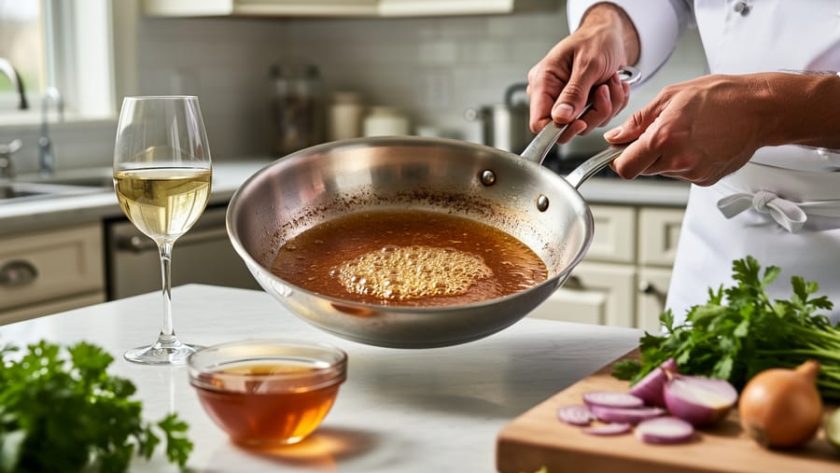
Water sautéing transforms vegetables through gentle, controlled heat without any oil, a technique you’ll refine as you learn to sauté and braise using classical French methods. Start with a preheated pan over medium heat, then add your vegetables directly to the dry surface. When they begin to stick or show early browning, add water one to two tablespoons at a time, deglazing the pan and creating steam that cooks without burning.
The French technique of étuver follows this same principle: vegetables cook gently in their own moisture within a covered vessel, developing concentrated flavor through slow evaporation. Temperature control makes the difference between success and soggy vegetables. Keep the heat at medium or just below, listening for a gentle sizzle rather than aggressive bubbling. The water should evaporate between additions, not pool in the pan.
Onions, garlic, celery, and bell peppers respond beautifully to water sautéing, softening completely while developing natural sweetness. Mushrooms release their own liquid and need minimal added water. Leafy greens like spinach and chard collapse quickly with just a tablespoon or two. Harder vegetables such as carrots and fennel require more time and slightly more water, added gradually as the pan dries.
Watch for the fond, those browned bits adhering to the pan surface, and deglaze with small water additions to capture that flavor. This builds complexity similar to oil-based cooking. The vegetables should glisten and soften within five to eight minutes for aromatics, longer for denser varieties. Master this foundation and you’ll apply it across countless preparations, from mirepoix to standalone vegetable dishes.
2. Vegetable Stock or Broth: Building Depth Without Fat
Vegetable stock transforms oil-free cooking from a limitation into an opportunity for layered flavor. When you heat a few tablespoons of quality stock in a sauté pan, you create a medium that not only prevents sticking but actively builds complexity through reduction and concentration.
Start by bringing your stock to a shimmer over medium heat before adding aromatics like onions, garlic, or shallots. The stock provides immediate moisture while allowing the vegetables to soften and release their essential oils. As the liquid evaporates, natural sugars caramelize against the pan surface, creating fond, those flavorful browned bits that form the foundation of professional sauces.
The key is restraint. Add stock in small increments rather than flooding the pan. Two to three tablespoons at a time allows proper evaporation and browning between additions. This technique, reminiscent of the French method of mouillement, develops depth comparable to oil-based sautéing while introducing the stock’s own aromatic profile.
For deglazing, stock proves superior to wine or water alone. After searing proteins or caramelizing vegetables, add a quarter cup of hot stock and scrape the fond with a wooden spoon. The dissolved particles create an instant pan sauce with minimal effort.
Homemade stock yields the most control over sodium and flavor intensity, but quality commercial options work well. Look for low-sodium varieties to manage reduction without oversalting. A rich, gelatinous stock from roasted vegetables provides body that mimics the mouthfeel oil typically contributes to finished dishes.
3. Parchment Paper (En Papillote): Sealing in Moisture and Flavor
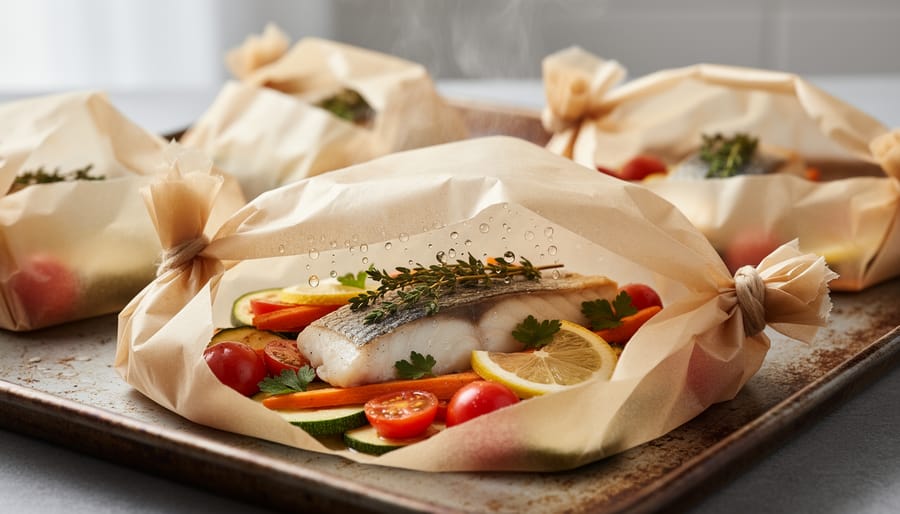
Cooking en papillote transforms parchment paper into a miniature steam oven, trapping moisture and aromatics around your ingredients without requiring any oil. This classical French technique works through a simple principle: as ingredients heat, they release natural juices that create steam within the sealed pouch, cooking the food gently while concentrating flavors. The method excels with delicate proteins like fish fillets (sole, cod, salmon), chicken breast, and shellfish, which benefit from the moist, even heat. Vegetables such as julienned carrots, sliced fennel, cherry tomatoes, and thinly cut zucchini cook beautifully alongside, releasing their own moisture to enrich the cooking environment.
Start with a 15-by-24-inch sheet of parchment paper, folded in half to create a crease. Open it flat and arrange your ingredients on one side of the crease, beginning with aromatic vegetables as a base, then your protein, followed by herbs (thyme, tarragon, dill), citrus slices, and a splash of white wine or stock for additional steam. Keep ingredients in a single layer and leave a two-inch border around the edges. Fold the paper over and begin crimping from one end, creating tight, overlapping pleats that seal the pouch completely, each fold should overlap the previous one by half an inch.
Bake at 400°F (200°C) for 12 to 18 minutes depending on the thickness of your protein, the packet should puff dramatically as steam builds inside. The parchment will brown slightly at the edges, signaling readiness. Serve packets whole, allowing diners to open them at the table and experience the aromatic release, or carefully transfer contents to warmed plates if you prefer a more formal presentation.
4. Dry Roasting and Toasting: Concentrating Natural Flavors
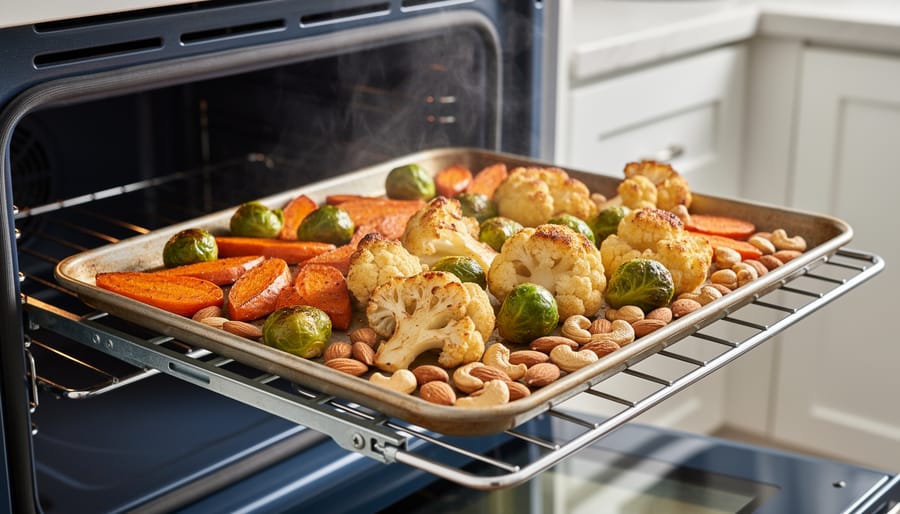
Dry roasting transforms ingredients through direct heat contact, coaxing out natural sugars and developing complex flavors through the Maillard reaction, all without a drop of oil. The technique relies on two fundamental principles: proper pan selection and precise heat management.
Cast iron and stainless steel pans excel at dry roasting because they conduct and retain heat evenly across their surface. Preheat your pan over medium heat for three to four minutes before adding ingredients. This creates the foundation for even browning. Avoid nonstick surfaces, which cannot withstand the higher temperatures needed for effective caramelization.
For vegetables like bell peppers, onions, or Brussels sprouts, cut pieces to uniform size and arrange them in a single layer without crowding. Turn them every two to three minutes using a flat spatula. The goal is golden-brown surfaces with slight charring at the edges. Oven roasting works equally well: preheat to 425°F (220°C), spread vegetables on a dry baking sheet, and check every ten minutes.
Spices require gentler heat and constant attention. Toast whole cumin, coriander, or fennel seeds in a dry skillet over medium-low heat, shaking the pan frequently. You’ll know they’re ready when their aroma intensifies noticeably, usually within two to three minutes. Remove them immediately to prevent burning.
Nuts follow similar principles but benefit from slightly lower temperatures. Spread almonds, hazelnuts, or walnuts on a baking sheet and roast at 350°F (175°C) for eight to twelve minutes, checking every three minutes. Many French kitchen appliances include convection settings that circulate air for more uniform toasting, though conventional ovens work perfectly when you rotate the pan halfway through.
5. Silicone Baking Mats and Non-Stick Surfaces: Modern Solutions
Silicone baking mats and quality non-stick surfaces represent a practical bridge between traditional French technique and contemporary health-conscious cooking. A properly maintained silicone mat creates a naturally non-stick barrier that withstands temperatures up to 480°F (250°C), eliminating the need for greasing while preserving the precision control French cooking demands. Restaurant kitchens increasingly rely on these oil-free cooking tools for everything from delicate tuiles to roasted vegetables that would traditionally require a film of oil.
The key is understanding their limitations. Never exceed the manufacturer’s maximum temperature, most silicone mats fail around 500°F, releasing compounds that compromise both flavor and safety. For high-heat roasting that demands temperatures above 450°F, opt for seasoned carbon steel or enameled cast iron instead. Between uses, wash mats with warm soapy water and allow them to air-dry completely; dish soap residue affects performance more than most cooks realize.
Professional results require matching the surface to the technique. Perforated silicone mats encourage airflow for crisper results with roasted vegetables, while solid mats work best for baking delicate items like macarons or tuiles where you need consistent heat distribution. For stovetop work, ceramic non-stick pans perform reliably at medium heat for sautéing aromatics or proteins, though they lack the thermal mass of traditional materials. Preheat gradually and never use metal utensils, silicone, wood, or heat-resistant nylon preserve the coating that makes oil-free cooking possible.
6. Puréed Fruits and Vegetables: Natural Moisture and Binding
Fruit and vegetable purées offer a dual function: they provide the moisture needed in batters and doughs while contributing binding properties that mimic some of oil’s structural roles. Applesauce stands as the most versatile substitute, working at a 1:1 ratio in quick breads, muffins, and cakes where its mild flavor disappears behind stronger ingredients like chocolate or spices. The pectin in applesauce creates tenderness similar to oil, though with slightly less richness.
Mashed banana works beautifully in recipes where its distinct flavor complements the finished dish, banana bread, naturally, but also chocolate-based baked goods where the fruit’s sweetness enhances cocoa notes. Use three-quarters cup of mashed banana per cup of oil called for, and reduce other liquid ingredients by two tablespoons to account for the purée’s water content.
For savory applications and neutral-flavored baking, puréed dates or root vegetables like sweet potato deliver moisture without sweetness dominating. Dates require soaking in hot water before blending to a smooth paste, then straining to remove any fibrous bits. This creates a binding medium with natural sugars that promote browning, useful in whole-grain breads where you want a darker crust.
The trade-off with all fruit and vegetable purées involves texture. They produce denser, more cake-like crumbs than oil, as they cannot coat flour proteins the way fat does to inhibit gluten formation. For lighter results, incorporate an extra quarter teaspoon of baking powder per cup of purée substituted, and avoid overmixing once dry and wet ingredients combine.
7. Steaming and Poaching: Gentle Heat for Delicate Results
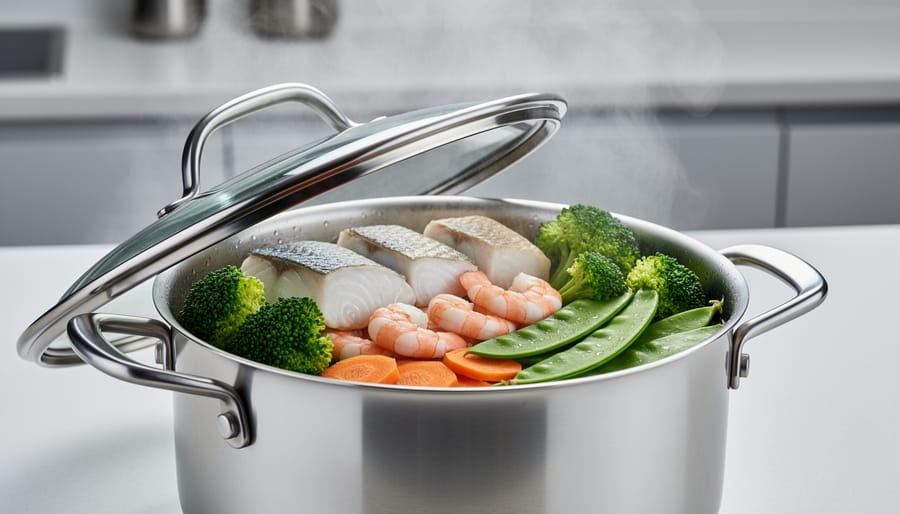
Steaming and poaching represent two foundational French techniques that deliver exceptional results without a drop of oil. Both methods rely on gentle, moist heat to cook delicate proteins and vegetables while preserving their natural flavors and nutritional integrity.
Steaming (à la vapeur) uses vapor to cook food suspended above simmering liquid. For professional results, choose a proper steamer setup: a bamboo steamer over a wok, a metal steamer insert in a covered pot, or an electric steamer. Keep the water at a gentle simmer, never a rolling boil, which creates excessive condensation that waterlogs food. Leave space between items for steam circulation. Fish fillets need 8-10 minutes per inch of thickness, chicken breasts require 20-25 minutes, and vegetables vary from 3 minutes for spinach to 12 minutes for dense roots like carrots.
Poaching (pochage) submerges food in barely simmering liquid, typically between 160-180°F. The liquid should show gentle movement with occasional bubbles breaking the surface, never turbulent boiling that tears delicate proteins apart. For fish and poultry, prepare a court-bouillon by simmering water with aromatics: sliced onions, carrots, celery, peppercorns, bay leaves, and a splash of white wine or lemon juice. This infuses subtle flavor while the proteins cook through evenly.
Both techniques excel with delicate ingredients that benefit from controlled, even heat. Salmon, sole, and halibut poach beautifully, while chicken breasts stay remarkably moist. Asparagus, green beans, and artichokes retain vibrant color and crisp texture when steamed properly, demonstrating how classical French methods achieve refinement without relying on cooking fats.
Mastering the Transition: Practical Tips from Professional Kitchens
Transitioning to oil-free techniques doesn’t mean abandoning your cookware or completely reimagining your approach, it’s about expanding your technical toolkit. Start by choosing one method from this list and practicing it repeatedly until the heat control and timing become intuitive. Water sautéing works brilliantly for weeknight vegetable preparations, while en papillote excels for dinner parties where presentation matters.
The key is recognizing that these alternatives complement rather than compete with traditional fat-based cooking. A properly executed dry roast develops flavors oil cannot replicate, just as a court-bouillon poach preserves delicate textures that pan-frying would destroy. Professional kitchens employ both approaches daily, selecting each based on the desired outcome rather than ideology.
Can I achieve the same browning without oil?
Yes, through dry roasting at higher temperatures (400-450°F) and ensuring your pan and oven are fully preheated. The natural sugars in vegetables will caramelize when moisture evaporates, though the process takes slightly longer than with oil.
How do I prevent sticking when cooking without oil?
Use high-quality non-stick surfaces, silicone mats, or parchment paper for most applications. For stainless steel or cast iron, ensure the pan is properly heated and add small amounts of liquid (water or stock) as needed to create steam that prevents adhesion.
Do these methods work for all cuisines?
Most cuisines have traditional oil-free techniques, Asian steaming, Mediterranean en papillote, Scandinavian poaching. The methods translate well across culinary traditions, though you may need to adjust seasonings and aromatics to match the flavor profiles you’re pursuing.
Keep detailed notes during your first attempts with each technique, recording temperatures, timing, and results. What works for delicate fish won’t necessarily apply to root vegetables, and your particular cookware will behave differently than another cook’s setup. The classical French emphasis on mise en place, having everything measured and ready, becomes even more critical when working without oil’s forgiving heat buffer.